Work↗03 — Featured↗E-Commerce & Generative AI

Thrift Plug.

AI-powered premium thrift e-commerce with real-time atomic inventory locking.

Visit Live Project↗
CLIENT
Thrift Plug (Cameroon)
ROLE
Lead Fullstack & DevOps Engineer
YEAR
2026
DURATION
3 Months
STATUS
In Production
thrift-plug
§01 — OVERVIEW
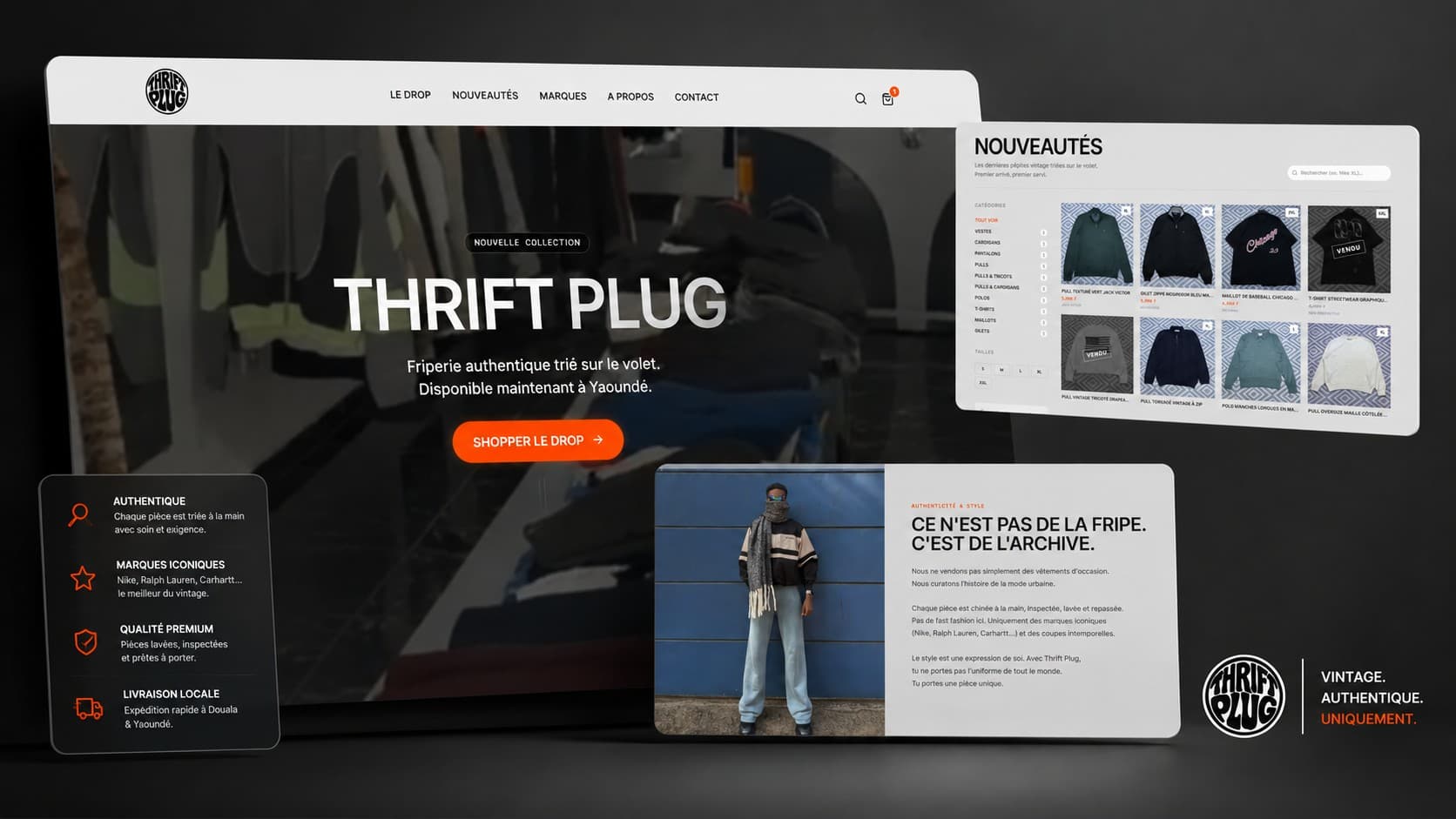
Thrift Plug is a custom-engineered e-commerce platform built to solve the unique operational and inventory challenges of the vintage retail market in Cameroon (serving Douala and Yaoundé). Unlike standard e-commerce sites where items have multiple quantities, thrift stores deal exclusively with one-of-a-kind products. This platform features a high-performance headless Next.js frontend integrated with Payload CMS, automated multimodal AI cataloging via Google Gemini, a custom atomic stock-locking engine to prevent double-purchasing race conditions, and a fully containerized CI/CD DevOps pipeline for continuous delivery.
§02 — CHALLENGE

Preventing Double-Selling on One-of-a-Kind Items

Since every thrifted garment is unique, a standard checkout flow creates a real risk: two customers buying the same item within the same second could both succeed, resulting in a sale the store can't fulfill.

Cataloging Bottlenecks at Volume

Uploading hundreds of unique garments weekly meant manual data entry for brand, size, color, category, and description — a bottleneck that capped how fast the business could scale, and a steady source of human error.

Image-Heavy Pages on Slow Connections

Thrift shoppers rely on high-resolution photos to judge garment condition, but serving thousands of heavy images directly was expensive and hurt load times on slower local mobile networks.

§03 — THE BUILD
thrift-plug-1.jpg
thrift-plug-1.jpg
[ Image Placeholder ]
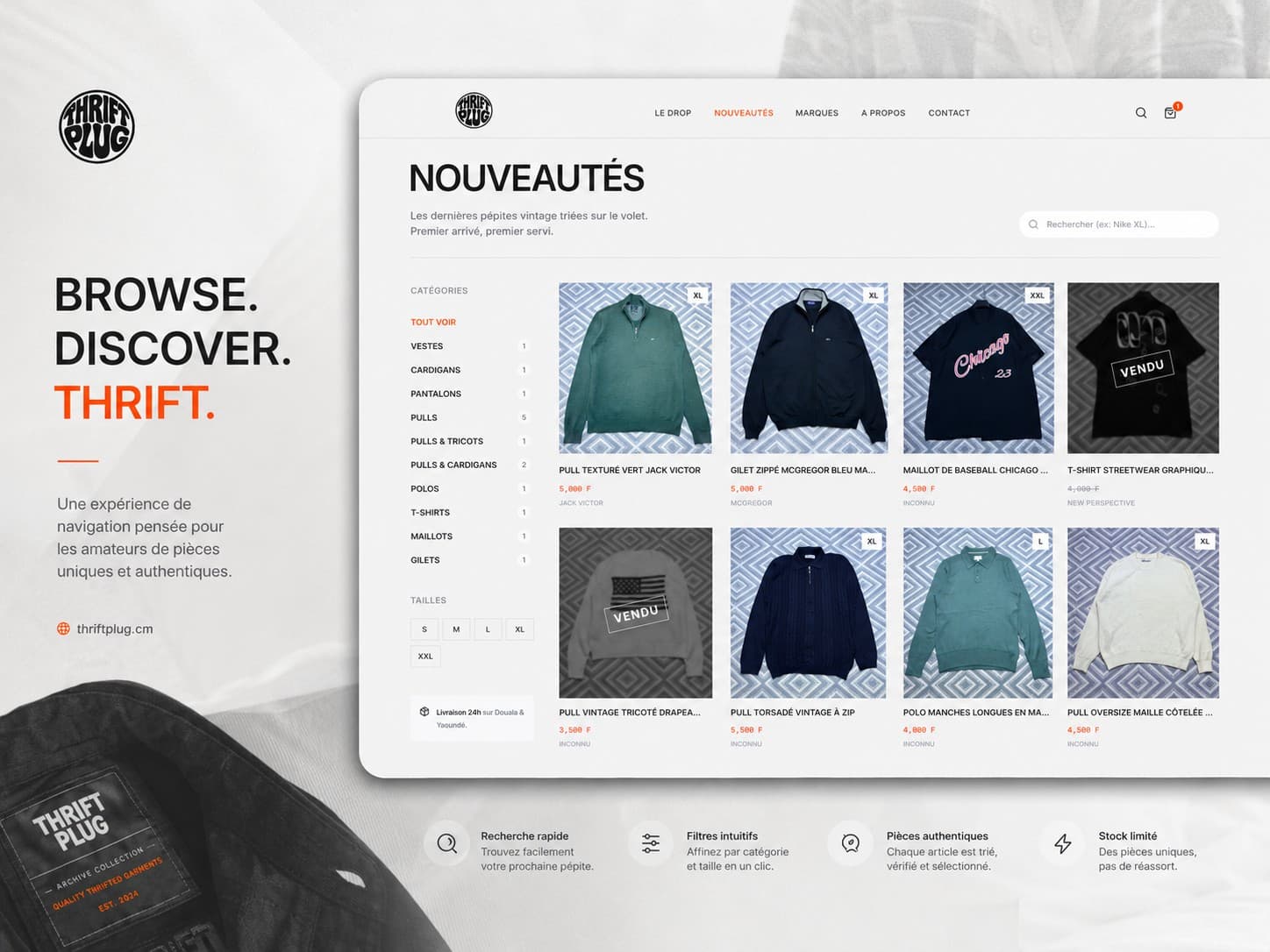
Thrift Plug homepage grid featuring premium one-of-a-kind vintage apparel
§04 — APPROACH
I designed a checkout flow with atomic, time-boxed reservations, so the moment one customer starts checkout on an item, it's locked and any concurrent attempt on the same item is safely rejected — with automatic cleanup for abandoned checkouts. For cataloging, I built an AI-assisted pipeline: newly uploaded garment photos are automatically analyzed to generate the product name, brand, color, category, and a sales-ready description, cutting a manual multi-field data-entry task down to a photo upload. Media is served through dedicated object storage and a CDN rather than the application server, keeping image delivery fast without adding database load. The whole platform ships through an automated CI/CD pipeline with integration tests gating every release, so updates go out reliably without manual deployment steps.
STACK
Next.jsMongoDBHostinger VPS
§05 — OUTCOMES
100%
Zero Double-Purchasing Errors in Production
< 5s
Multimodal AI Garment Cataloging and Analysis Time
100%
Automated DevOps CI/CD Deployment Pipeline
NEXT PROJECT
04 / 6
Nextise→

An enterprise-grade SaaS and AI automation ecosystem empowering DACH businesses through scalable workflows and custom LLMs.